(to find out the meaning, watch the film)
(Produced by by Ornana films)
(notes on) biology from ornana films on Vimeo.
(notes on) biology from ornana films on Vimeo.

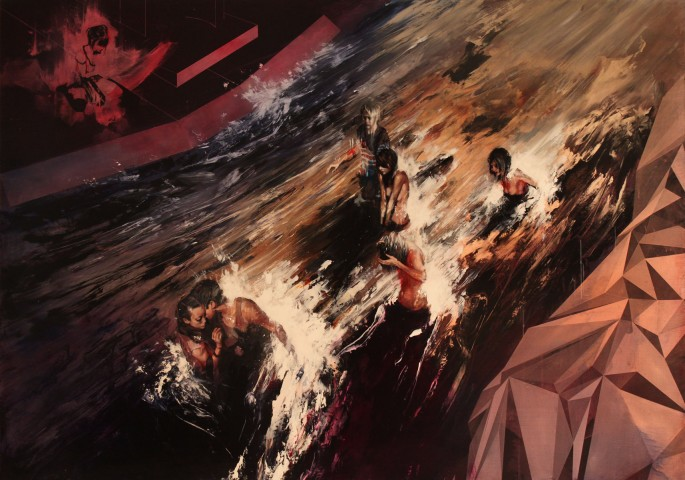
"The wise draftsman brings forward what he can use most effectively to present his case. His case is his special interest- his special vision. He does not repeat nature... When a fine dancer appears before you in a very significant gesture, you are caught only by the folds of her drapery which respond to the great will in her movement. She has established in you a trend of interest. What enters your vision is only the sequences of this established interest. When gamblers play in luck, when they continue to win, seem to have a knowledge of how the card will turn, they may be said to have fallen in with one of the courses nature takes. They do not know it, but there are sequences and sequences, untold numbers of them overlaying, intermingling. Every movement in nature is orderly, one thing the outcome of another, a matter of constructive, growing force. We live our lives in tune with nature when we are happy, and all our misery is the result of our effort to dictate against nature. In moments of great happiness we seem to be with the universe; when all is wrong we seem to be alone, disjointed. Things are going on without us..." (Robert Henri, The Art Spirit)

"I normally describe what I do as mixed media painting... the idea is to get different kinds of marks to work off of each other - so sometimes I'll paint/draw fairly accurately, then work quite loosely on a section, then break up elements of print on another section. At the moment I think a lot of the painting I do is too tight, it should really be looser and more expressive." (John Trippe, Fecal Face)




"We walked into the relationship with DDB saying we've always had a different take on the world. All the other brands take more of a blood, sweat and tears approach. We think fun is more of a sustaining motivational factor. Having fun staying in shape is our strategic territory." (Advertising Age)

3. Don't fear type; become its master.
Often, being a good typographer means not making the simple mistakes. To accomplish this, you’ll need a working knowledge of classical typography. Go get one. “The Elements of Typographic Style” by Robert Bringhurst, “Thinking With Type” by Ellen Lupton and “Grid Systems in Graphic Design” by Josef Müller-Brockmann are cover-to-cover must-reads. Repeat after me: “Free fonts from the internet are crap, I will not use them.” Keep saying that.
4. Define your audience.
Who are you speaking to and what is the objective? If you can’t definitively answer both of these questions about a project you’re about to start working on, go back to the drawing board. Graphic design is simply a plan that visually articulates a message. Make sure you have the message and its intended viewer sorted out before you start making. Communicate with purpose—don’t just make eye candy.
15. Content is still king.
Technically, Elvis is still the king, but for the sake of this argument, let’s put an emphasis on the message, and consider design as a plan for delivering it. The most effective and memorable visual communication almost always has the right mix of form and content, regardless of medium. Good design can engage a viewer, but interesting content will keep them reading, and thinking, past the headline.
27. Remember that your Mac is a tool.
Twenty years ago, many people in our industry were sure that desktop publishing would mark the end of professional graphic design as we knew it. They confused the convenience of new technology with the skill and passion required to design with it. Take a good look at your design methodology and the role technology plays in your work. Can you select “Shut Down” and still be an effective visual communicator? Practice that.
